World building is something every writer in every genre needs to pay attention to. Sometimes it's to build a town similar to the one we live in, or it could be a fantasy world where magic rules and dragons fly. Read a informative article by Jane Lane Walters of tips and traps on world building. Be sure to read all the way through. The ending is one every writer can relate to. And then go back to read parts 1 and 2. Or pick up one of Janet's books.
~till next time, Helen
Books We Love Insider Blog: World Building For All Genres Part 3 Janet Lane Wa...: The next area of World building to consider is Characters. There are a number of areas where people help weave the world web. ...
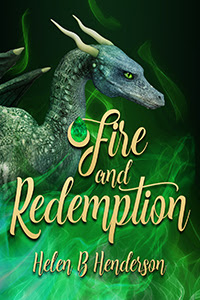


Click on Covers for Excerpts and More
Showing posts with label historical research. Show all posts
Showing posts with label historical research. Show all posts

5/24/2016
Fiction and Research by Jacqueline Seewald
You’ll
notice that a lot of writers set their novels and short stories in places they
either live in or have lived in. This may seem provincial, but in fact, it makes
for good writing. If authors know a place well, they can create a realistic
setting, an intriguing background for their writing. Setting is one of the
important components of any piece of fiction.
The rest of the post can be found at Fiction and Research by Jacqueline Seewald.
~till next time, Helen
And if you haven't read Jacqueline's fiction, check out the following Tuesday Titles: The Killing Land or The Dark Moon Rising by this very talented author.
The rest of the post can be found at Fiction and Research by Jacqueline Seewald.
~till next time, Helen
And if you haven't read Jacqueline's fiction, check out the following Tuesday Titles: The Killing Land or The Dark Moon Rising by this very talented author.
5/02/2014
XPost - 5 Tips to Avoid total Disaster
 When I advise new writers (and sometimes experienced ones) I like to use information from practical experience and not necessarily what is in the latest books. And I am trying to follow through with the philosophy when I am cross-posting (or commenting on) articles. Even within a sub-genre, writers are such a diverse group that what works for one, either as a writing process or marketing, is an absolute torture or flop for another.
In that vein, I'm forwarding a guest post from the LiveWriteThrive blog
by copywriter, editor, and educator Jessica Millis. As you can see from
just the bio line, she comes with experience from various sides of the
table, and what is perhaps the most important one--she is also a reader.
Although I disagree with the statement that, "Most novels in the online and offline
market today are garbage," (mainly it is the word "Most" I object to,) her tips may not turn a bad novel into
a best seller, but they are points to consider, especially for those
with a novel inside them (that is still there after ten or twenty years.)
 What I liked most is that she didn't start off with the usual advice of "Write what you know." Her first tip to avoiding a total disaster as a novelist, "Don’t Spend Forever Gathering Material," is often all too accurate. One of the points I consistently make when I lecture authors on research is once you have a base, start writing. You don't need to know everything about every era (or even one) before you begin to put words down on paper. If your character ends up visiting Notre Dame Cathedral and you had him originally going to London, when you come to a slow spot (aka writers block) dig up the basics for the placeholders you've left in the prose, research a unique detail or two, then continue on.
For the rest of Millis's tips, go to http://www.livewritethrive.com/2014/04/21/5-tips-to-avoiding-total-disaster-as-a-novelist/.
What is your favorite tip to avoid disaster?
Till Next Time ~ Helen
6/16/2013
The Redcoats are Coming, The Redcoats are Coming
As a historian, I always try to make the point that while every facet about history isn't known, it is a writer's responsibility to their readers to be as accurate as possible--and that the duty also applies to fiction writers. And not just authors whose characters live in settings now a distant memory. Yesterday, whether recent or long gone, can creep into fiction whether it is the town the character walks through, their family history, or an event that set the future in motion.
 One fun way to
research is with a road-trip to a historical site. Another way to learn
history--watch first person interpreters at work and play. Or you can combine
the two with a reenactment at a historic site. While small encampments offer
the opportunity for more intimate contact, larger events such as the Battle of
Gettysburg for the Civil War or the Revolutionary War Battle of Monmouth offer
other advantages including cavalry and artillery units.
One fun way to
research is with a road-trip to a historical site. Another way to learn
history--watch first person interpreters at work and play. Or you can combine
the two with a reenactment at a historic site. While small encampments offer
the opportunity for more intimate contact, larger events such as the Battle of
Gettysburg for the Civil War or the Revolutionary War Battle of Monmouth offer
other advantages including cavalry and artillery units.
Tips on how to
approach such a day will be discussed in a future post, but it doesn't have to
be a solitary event. While the ideas presented at www.njfamily.com/NJ-Family/June-2013/Watch-a-Reenactment-of-the-Battle-of-Monmouth
are for a specific event, they can be applied elsewhere.
 This year the Battle
of Monmouth reenactment is being held June 15-16. More than 1,000 re-enactors
will be encamped at the Monmouth
Battlefield State Park to drill, demonstrate, and recreate Revolutionary
War battle tactics. You can watch meals prepared over wood fires, see
officers training infantry, cavalry, and artillery, and smell the gun smoke as
British and Continental armies do battle. More information on the re-enactment
and a schedule of the days' events can be found at www.state.nj.us/dep/parksandforests/parks/monbat_re-enact-index.html. An $8 per vehicle donation to defray the
costs of the weekend. If you go be sure to check out the newly-renovated
visitor center.
This year the Battle
of Monmouth reenactment is being held June 15-16. More than 1,000 re-enactors
will be encamped at the Monmouth
Battlefield State Park to drill, demonstrate, and recreate Revolutionary
War battle tactics. You can watch meals prepared over wood fires, see
officers training infantry, cavalry, and artillery, and smell the gun smoke as
British and Continental armies do battle. More information on the re-enactment
and a schedule of the days' events can be found at www.state.nj.us/dep/parksandforests/parks/monbat_re-enact-index.html. An $8 per vehicle donation to defray the
costs of the weekend. If you go be sure to check out the newly-renovated
visitor center.
Till the next time.
Helen
Subscribe to:
Posts (Atom)